
Star chair
The story of the Star Chair
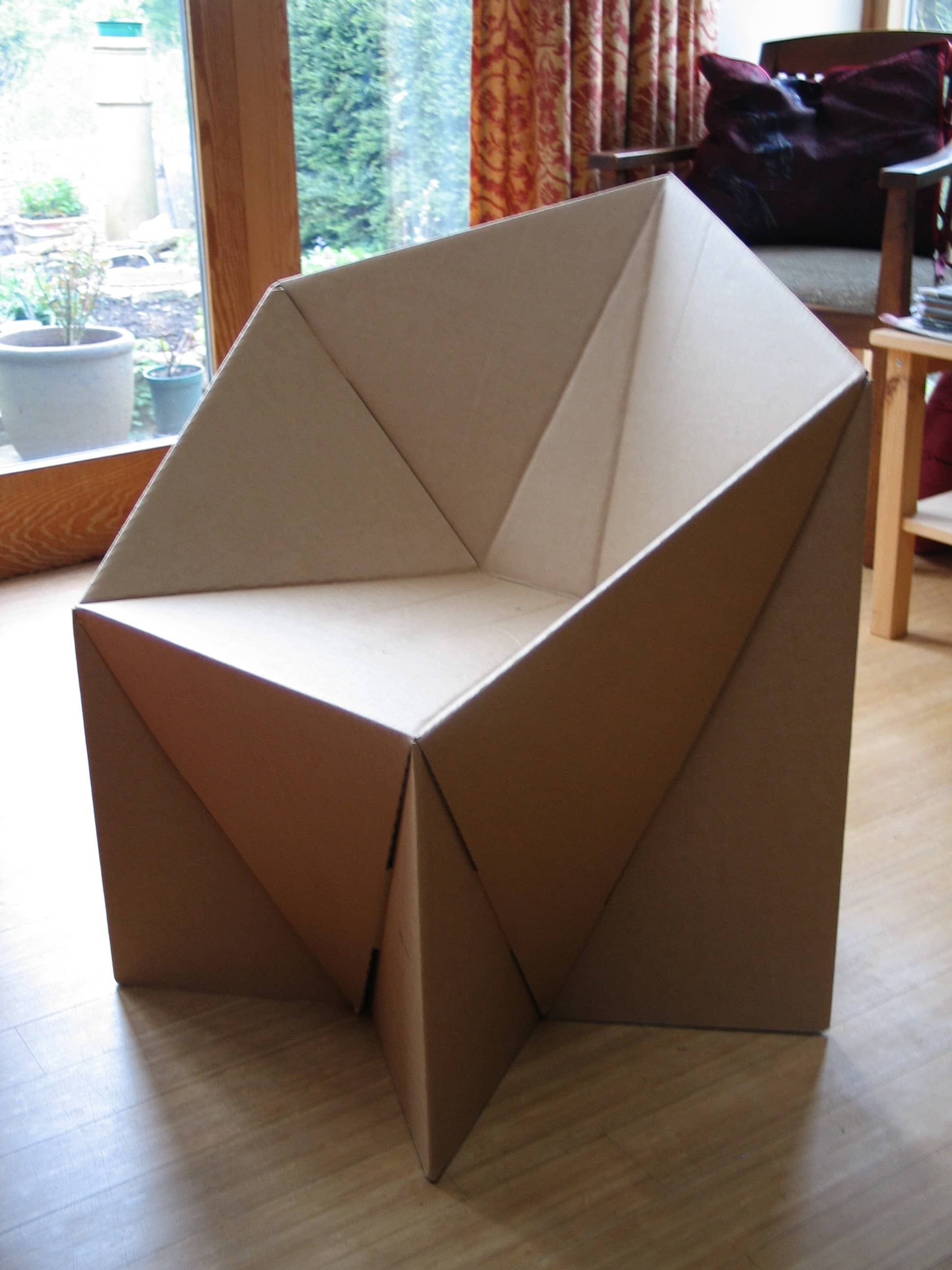
In 1970, during my first year at architecture school, I designed a cardboard chair – the Star Chair.
Of the various design projects I have done in the last 50 years, it remains my personal favourite – mainly on account of the way in which it addressed and resolved a number of design problems.
The drawings remained filed away for the next 27 years, after which I decided to make a smaller child’s version. This was licensed for a time by Habitat who sold it through their stores.
Since that time, with the help of my son, Tomas Millar, I have had a small batch made for use at an event in Stroud’s Goods Shed and have also sold a number to individuals.
I remain pleased with it, as a response to the challenge of designing with a very specific material. Whether it deserves to be considered a good chair design is for others to decide.
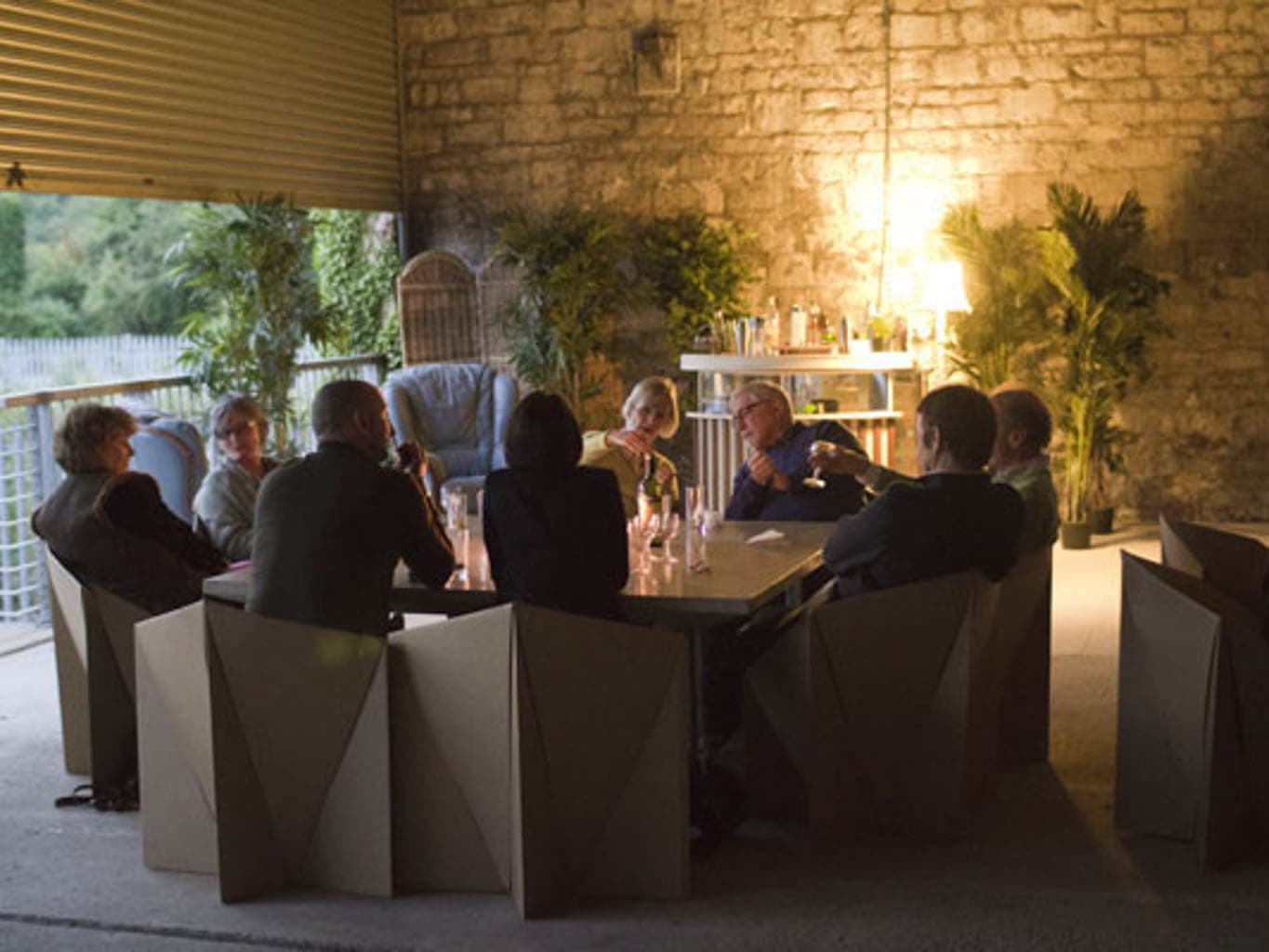
Pop-up restaurant, Stroud Goods Shed 2
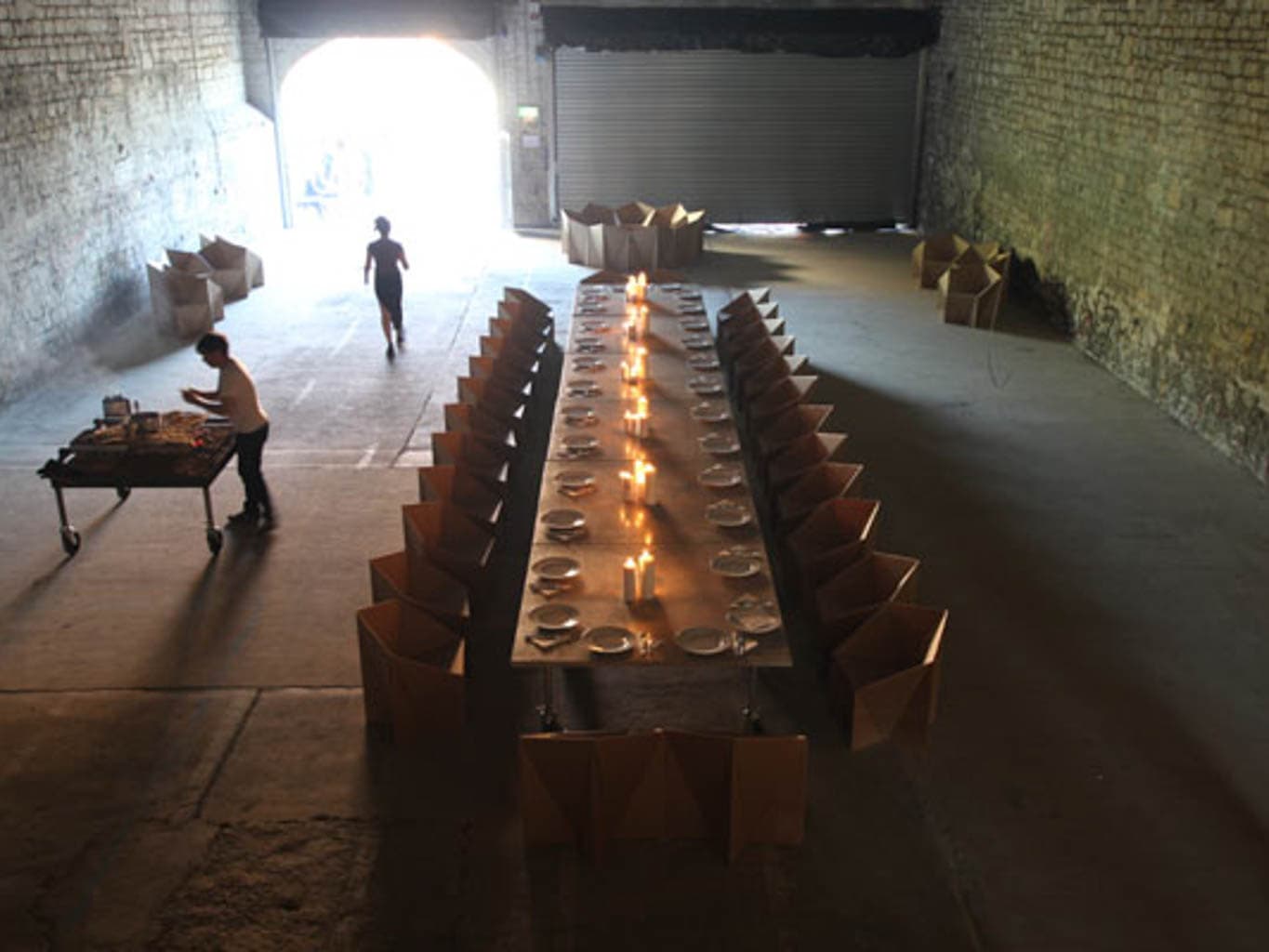
Pop-up restaurant, Stroud Goods Shed 1
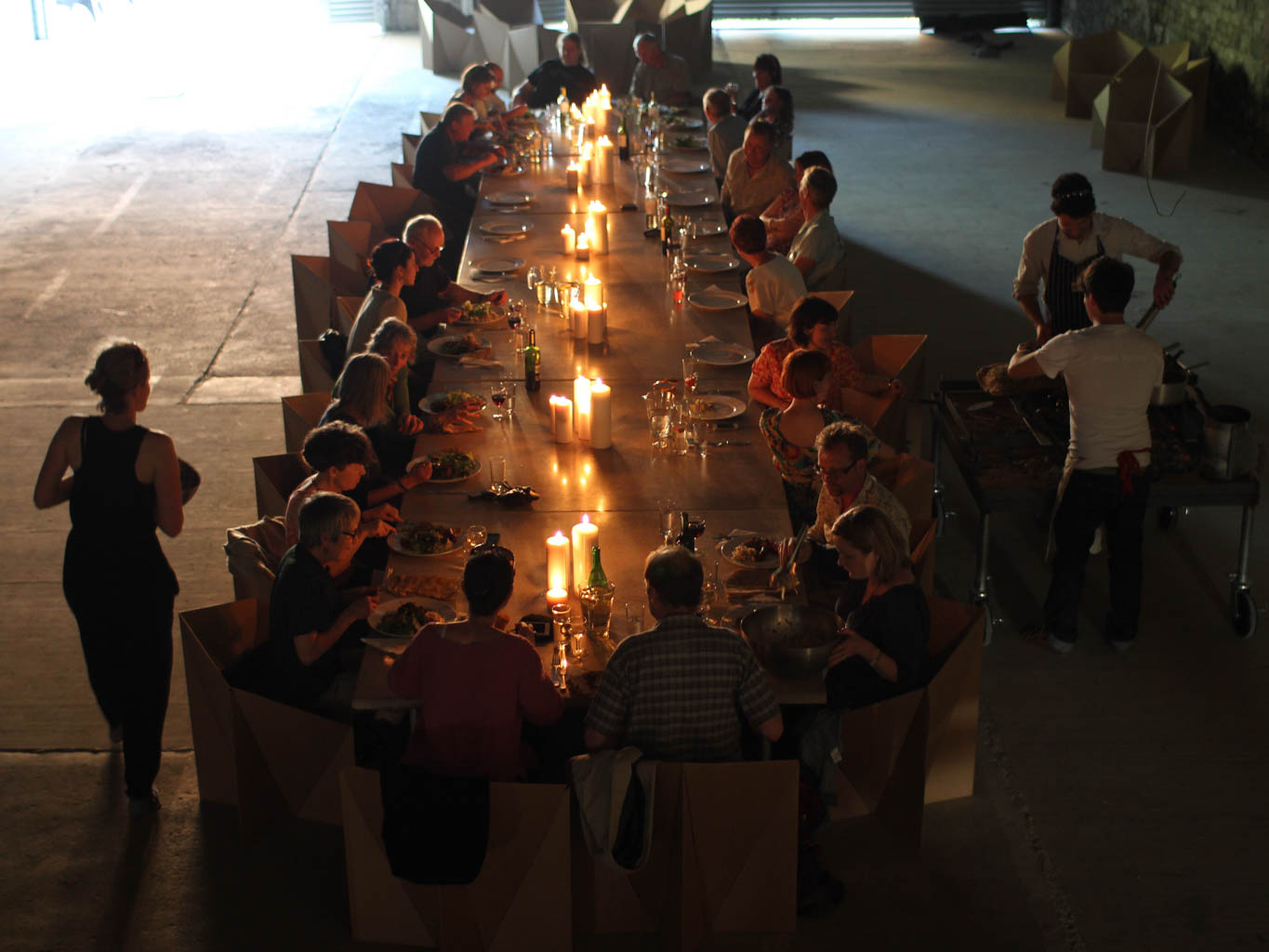
Pop-up restaurant, Stroud Goods Shed 3

Loose arc
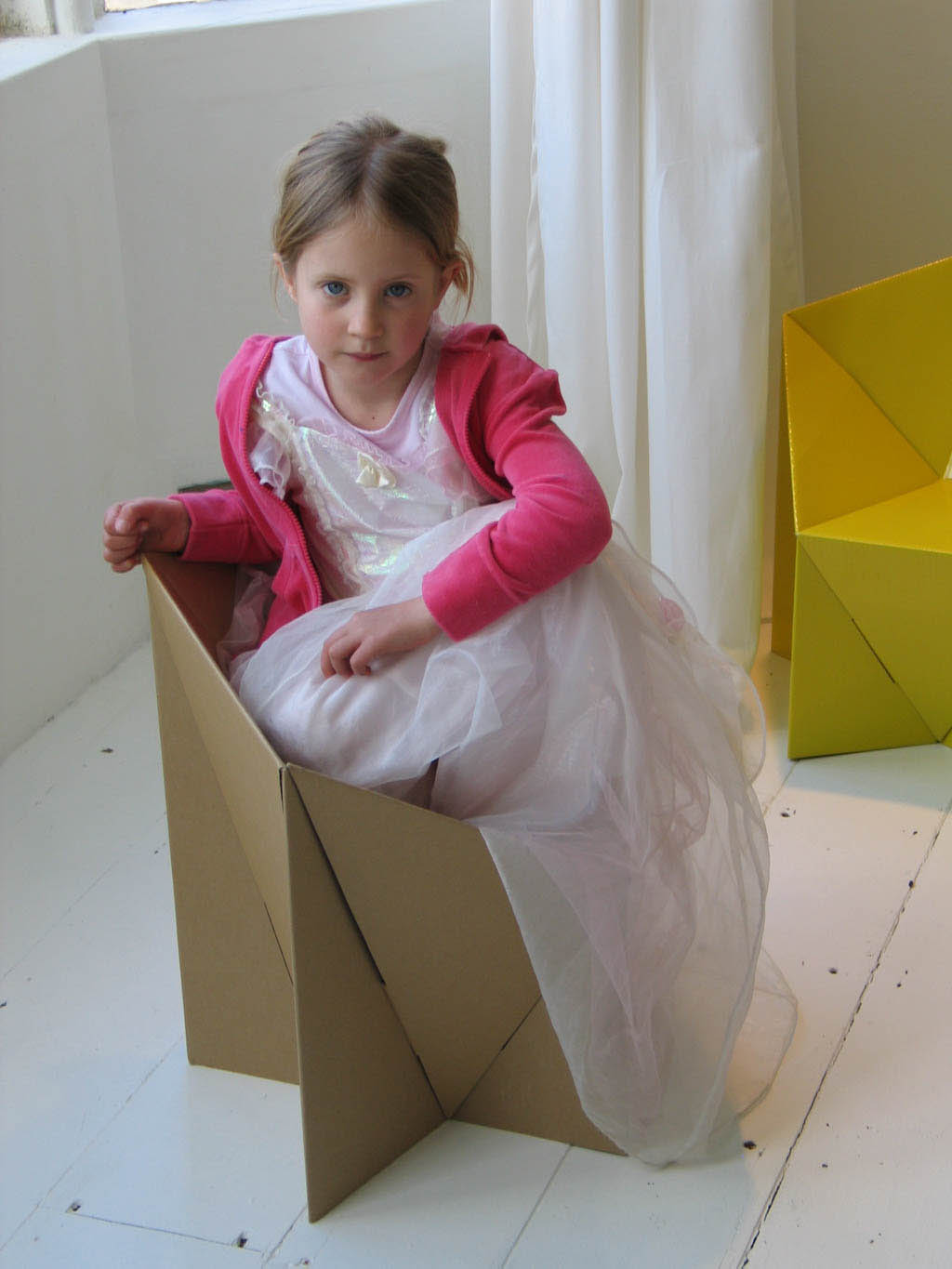
Habitat 1
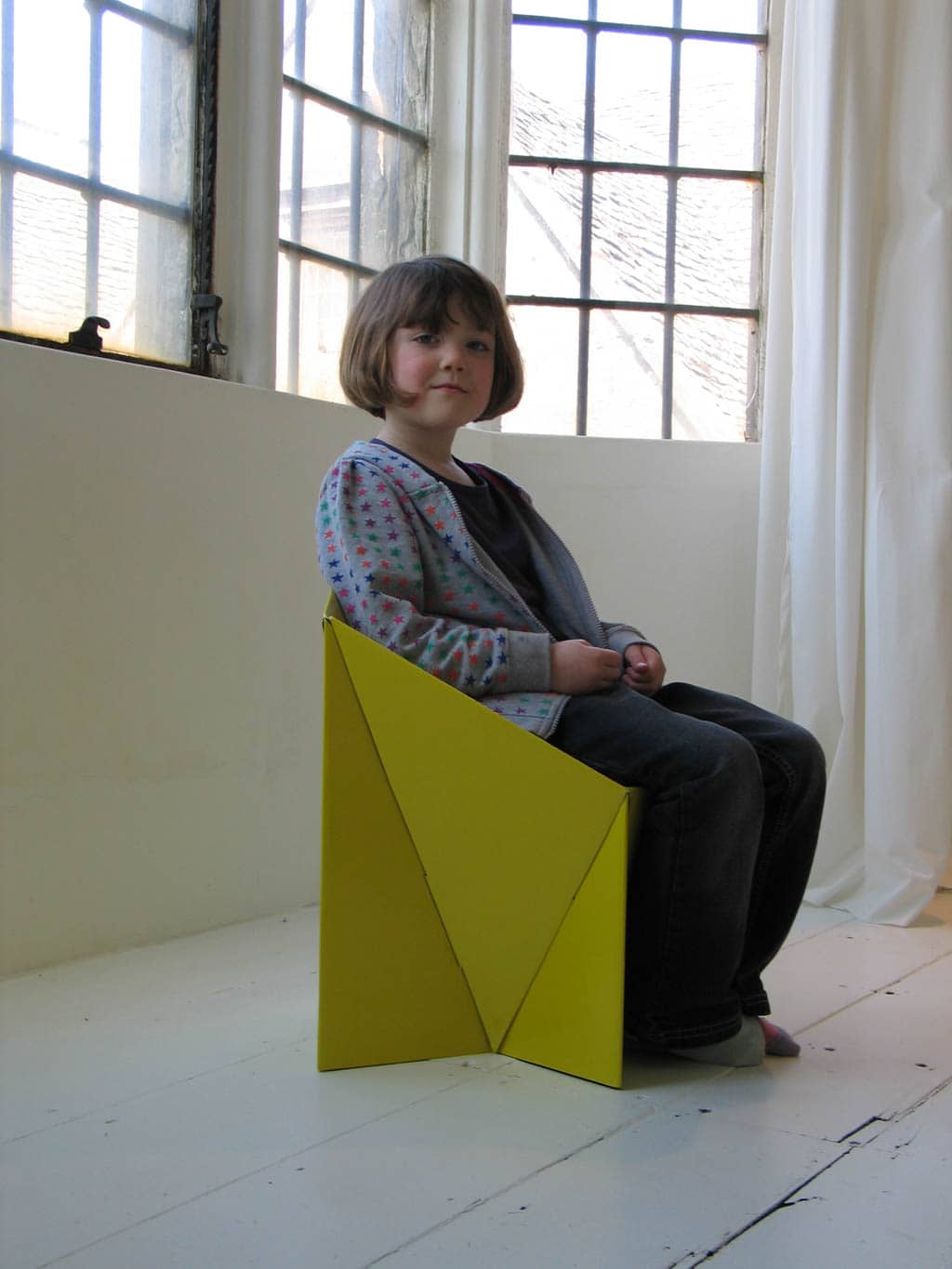
Habitat 2
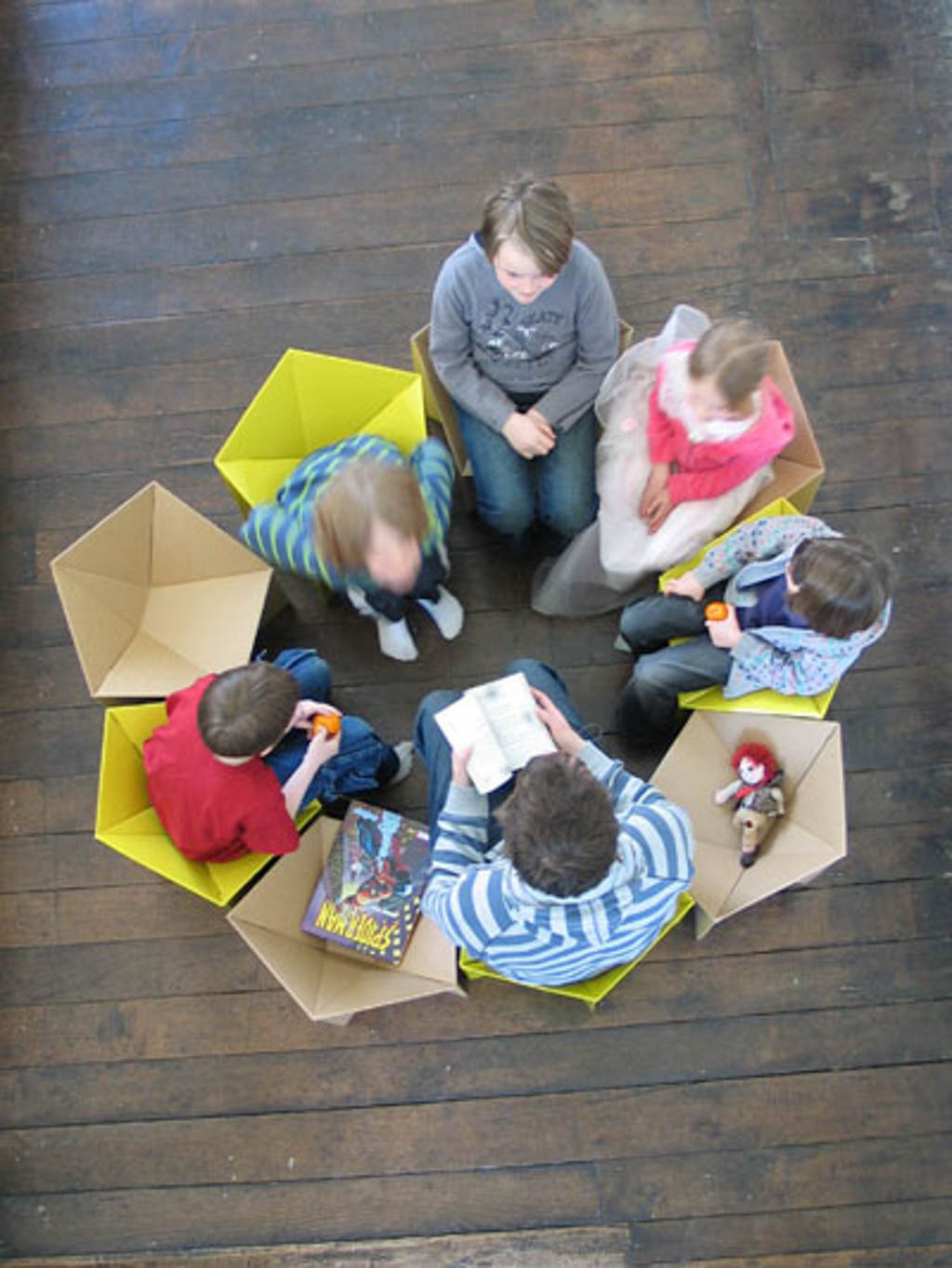
Story circle
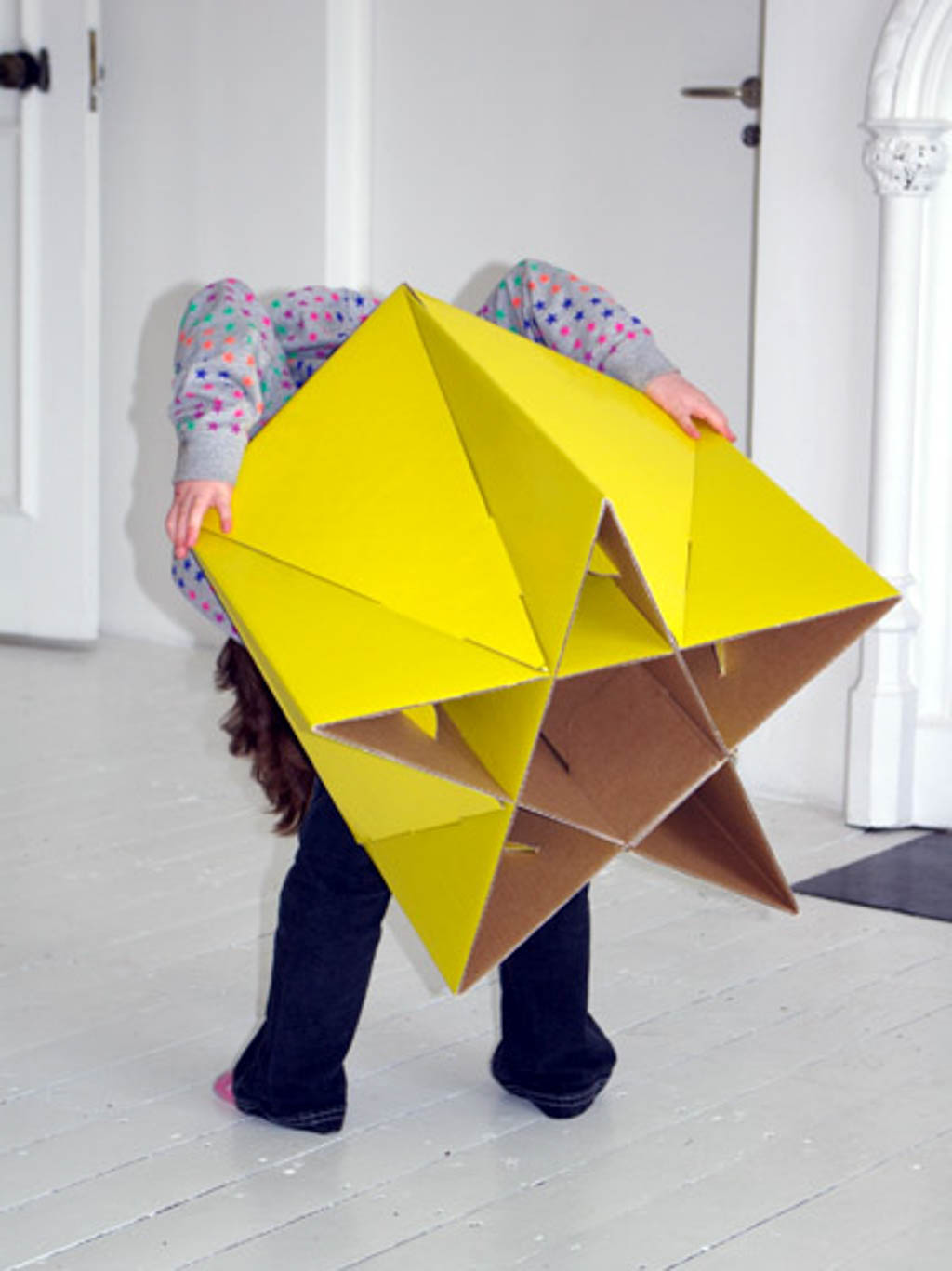
The star
The design process
Designing anything – whether it be a building, the cover of a book, a software application or a piece of furniture – is typically a process in which a number of initial intuitions are repeatedly subject to a process of critical evaluation and refinement until a state is reached in which the design suddenly ‘stands on its own feet’.
If this is to be successful, it is important not to get too attached to these early ideas, otherwise there will be a reluctance to let go of them in favour of something better. This was a lesson learned from my first architecture teacher, John Frazer, and one that I have never forgotten: if you are unsure whether a design is right, then it’s not.
The design of the Star Chair illustrates this principle very clearly
Geometry
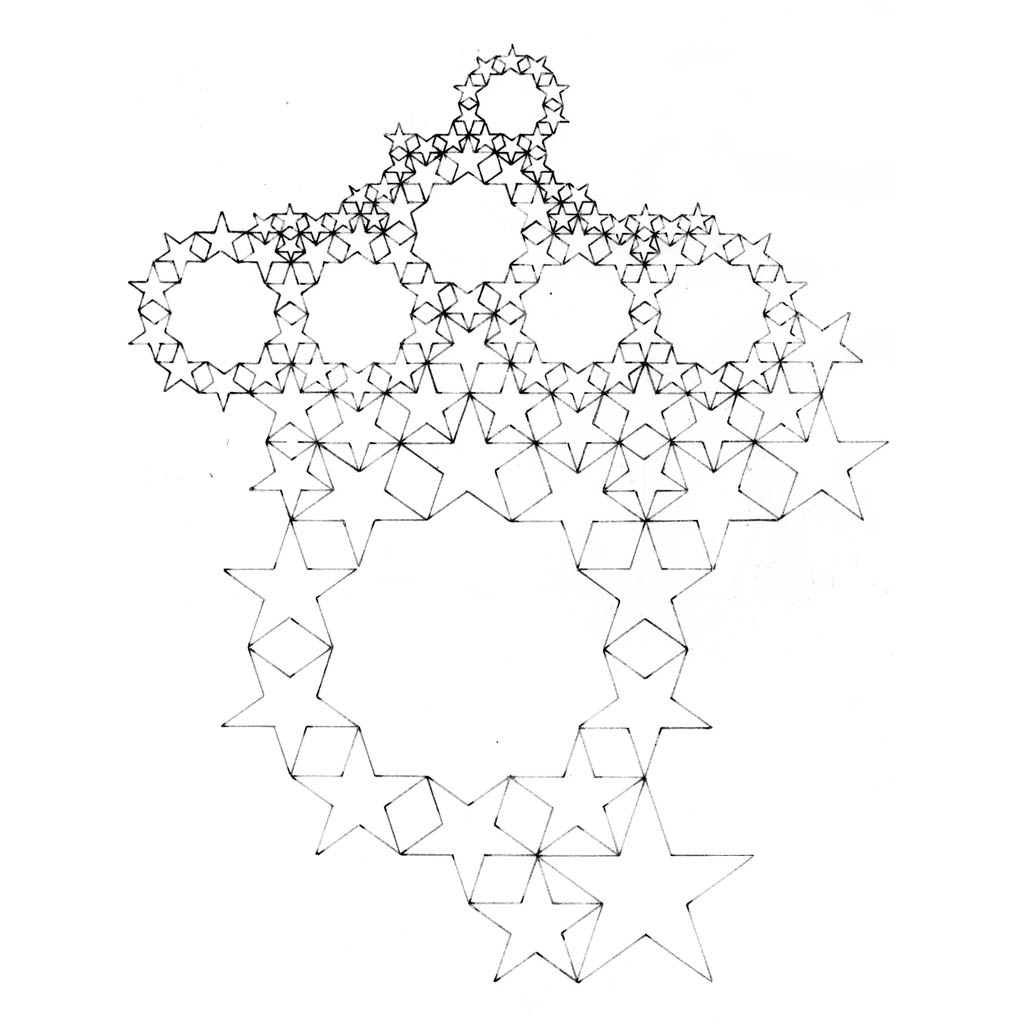
The Pentagram
The Star Chair is based on a pentagonal geometry, long associated with magic and esoteric knowledge.
In the diagram above, the lengths of the edges of each successive generation of pentagrams are related according to the Golden Ratio.
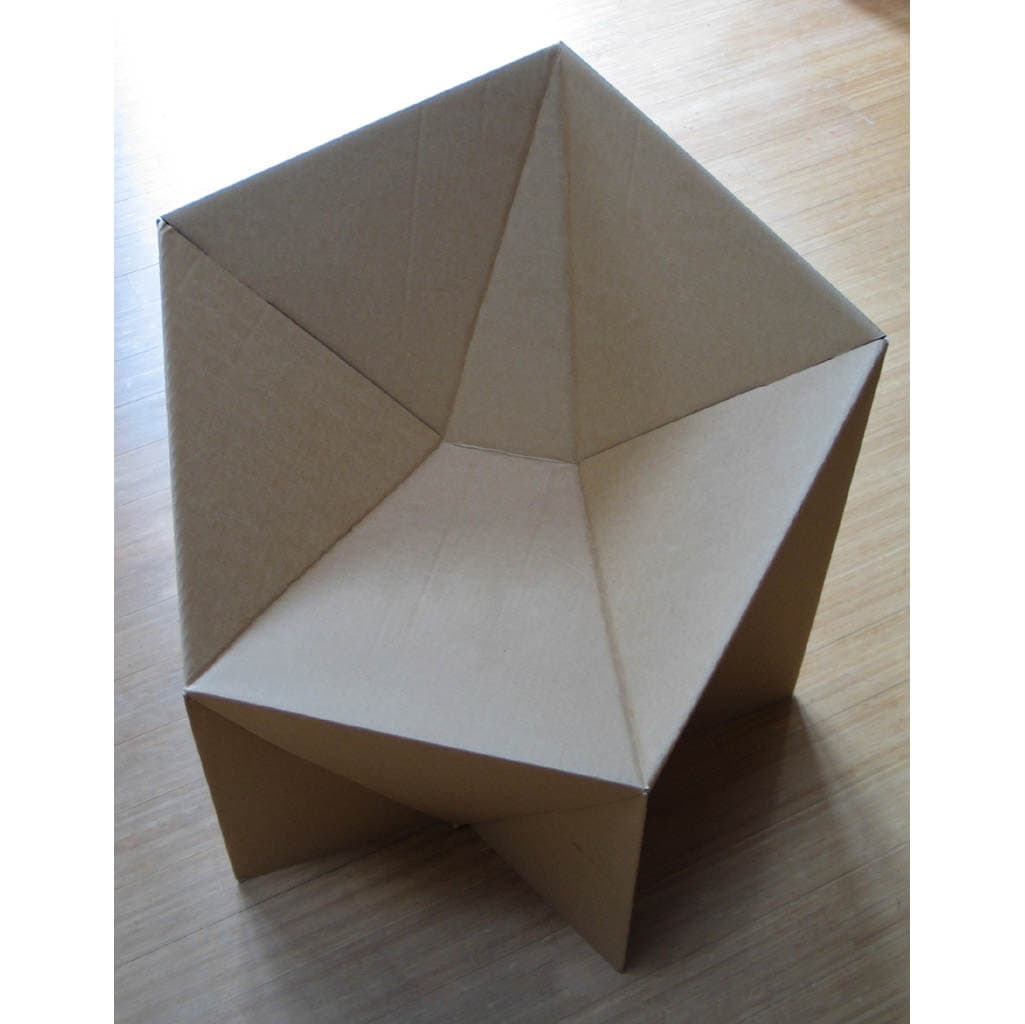
Deviations
As it turns out, no part of the chair is exactly pentagonal in shape. The inclined perimeter of the seat comes closest.
The deviations were introduced to strike an aesthetic balance between the shape of the chair in plan (see right) and the more natural view shown above.
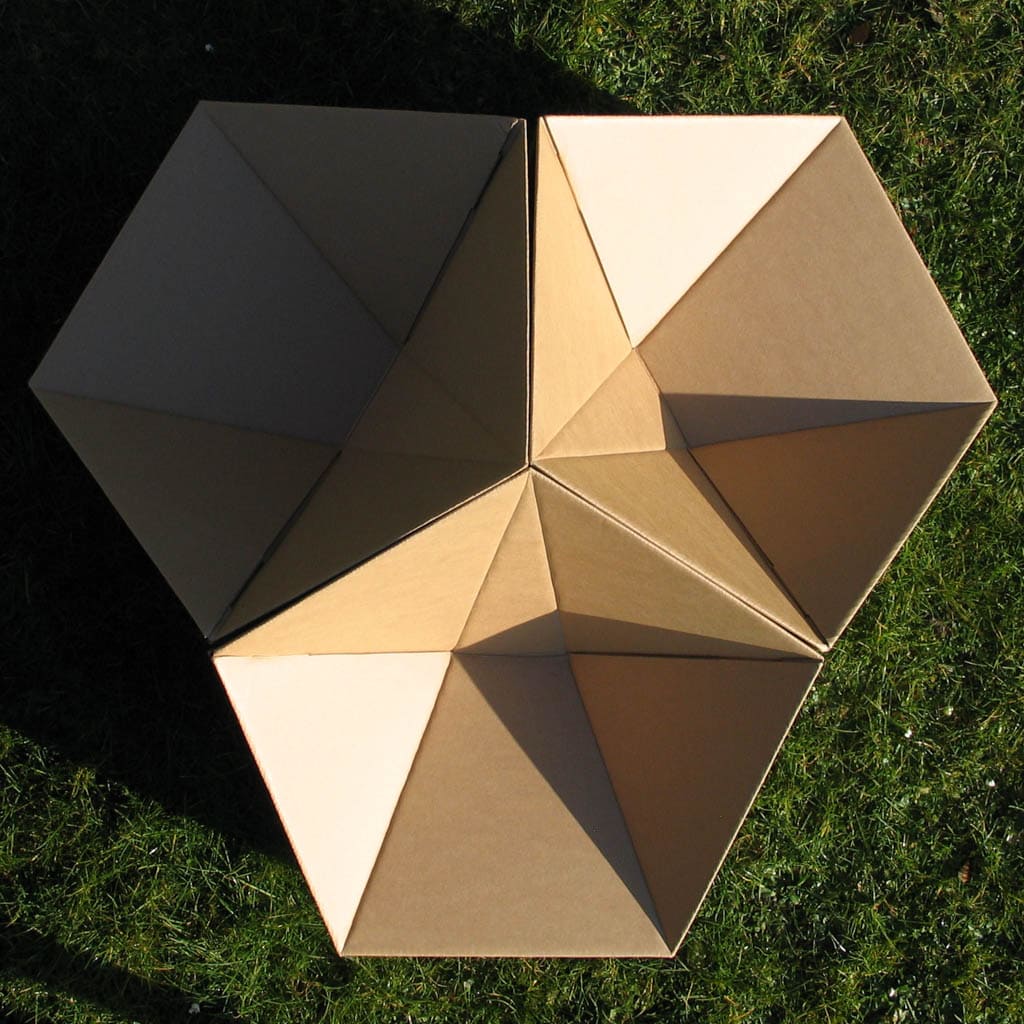
Fitting chairs together
A small adjustment to the shape of the chair in plan allows three chairs to be arranged as shown.
From this angle, the deviation from a regular pentagon can be seen very clearly.
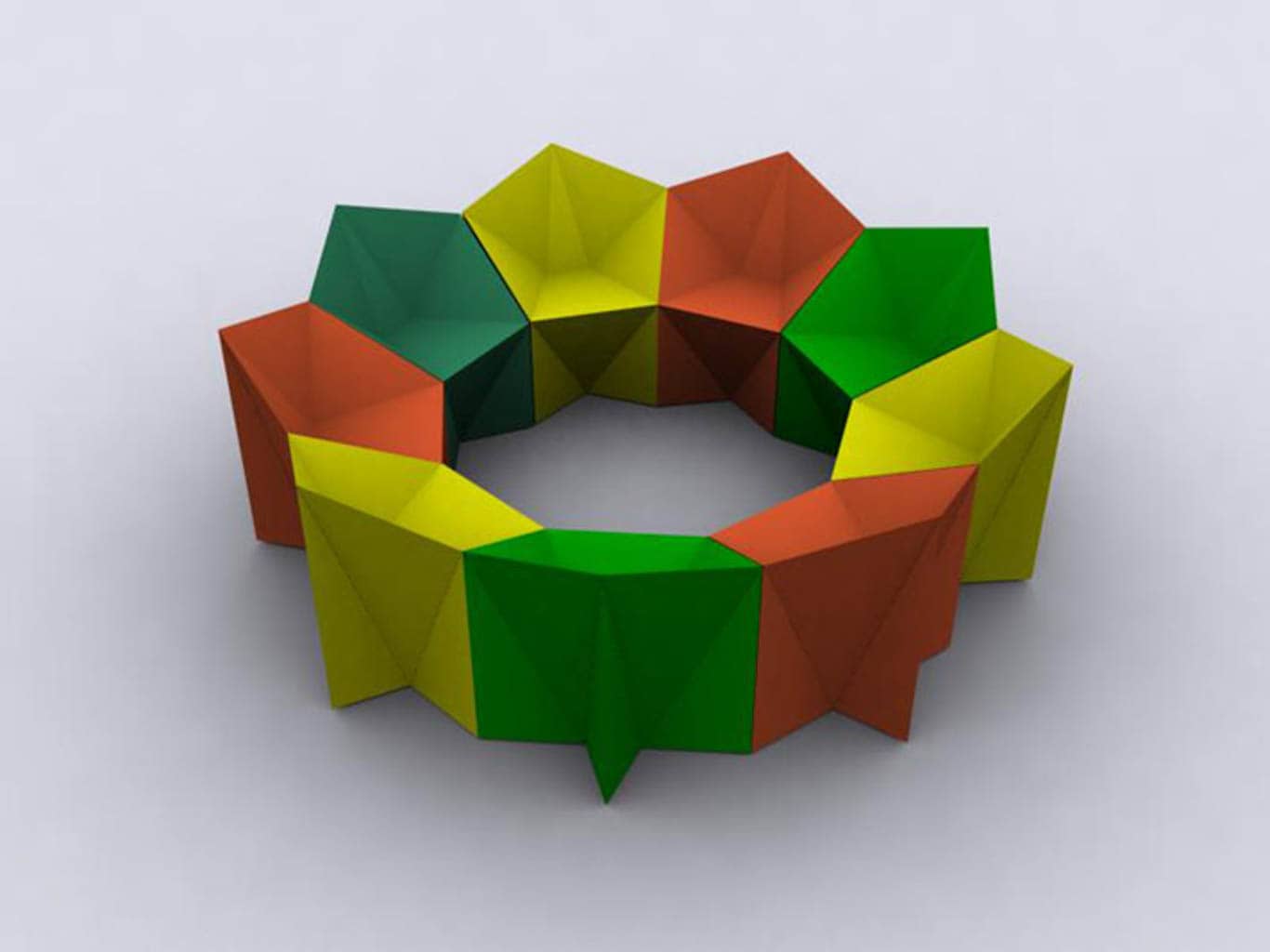
Circles ...
A similar adjustment allows nine chairs to be arranged in a circle. (If the plan shape were a regular pentagon the number would be ten)

... and more
Using the two basic ways of arranging chairs (back to back and side by side) all sorts of seating patterns can be created
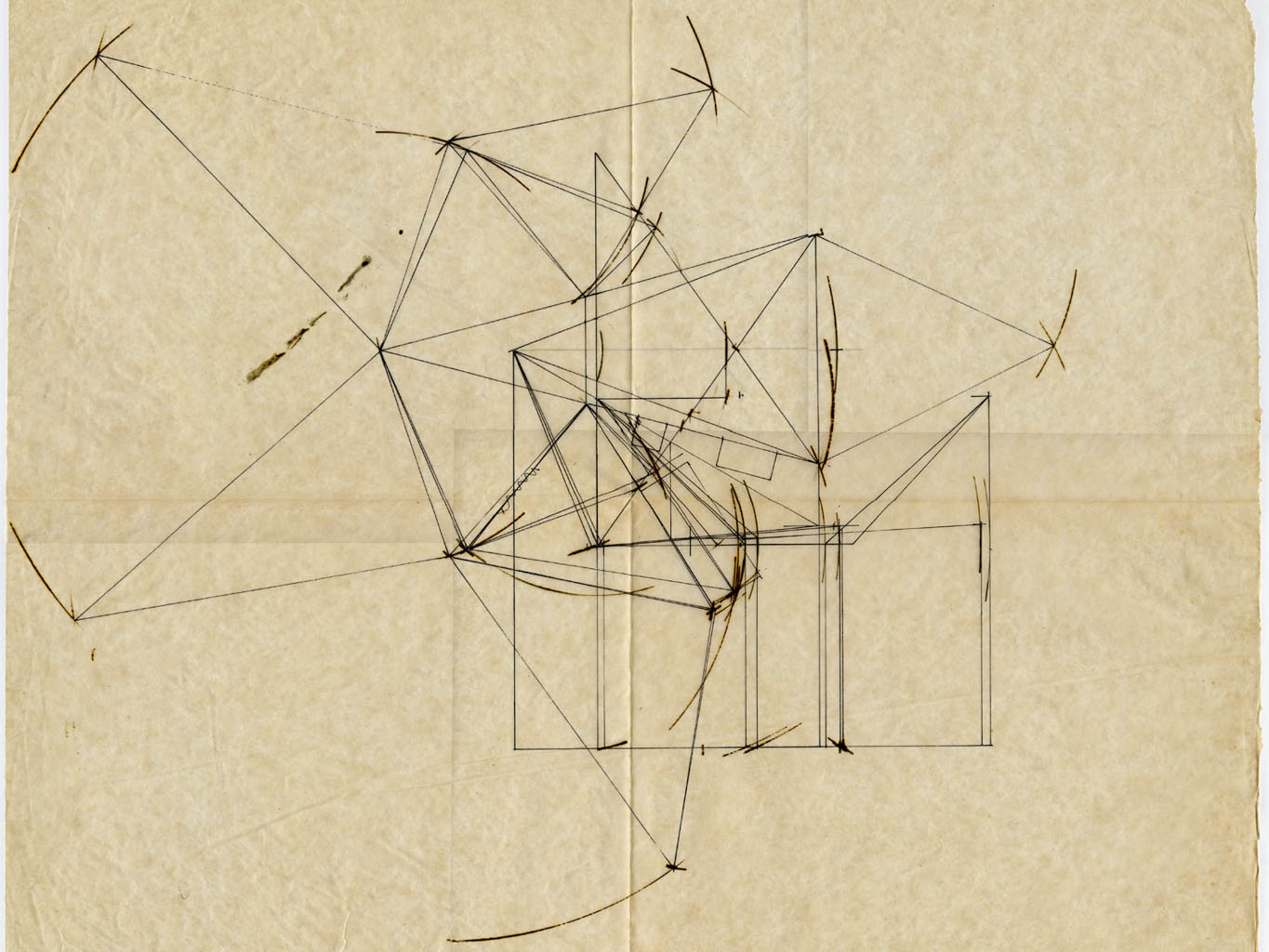
The pattern
The pattern for the Star Chair was worked out using a pair of compasses and a straight edge.
Interestingly, I no longer believe myself capable of repeating the process.
Manufacture, packaging and assembly
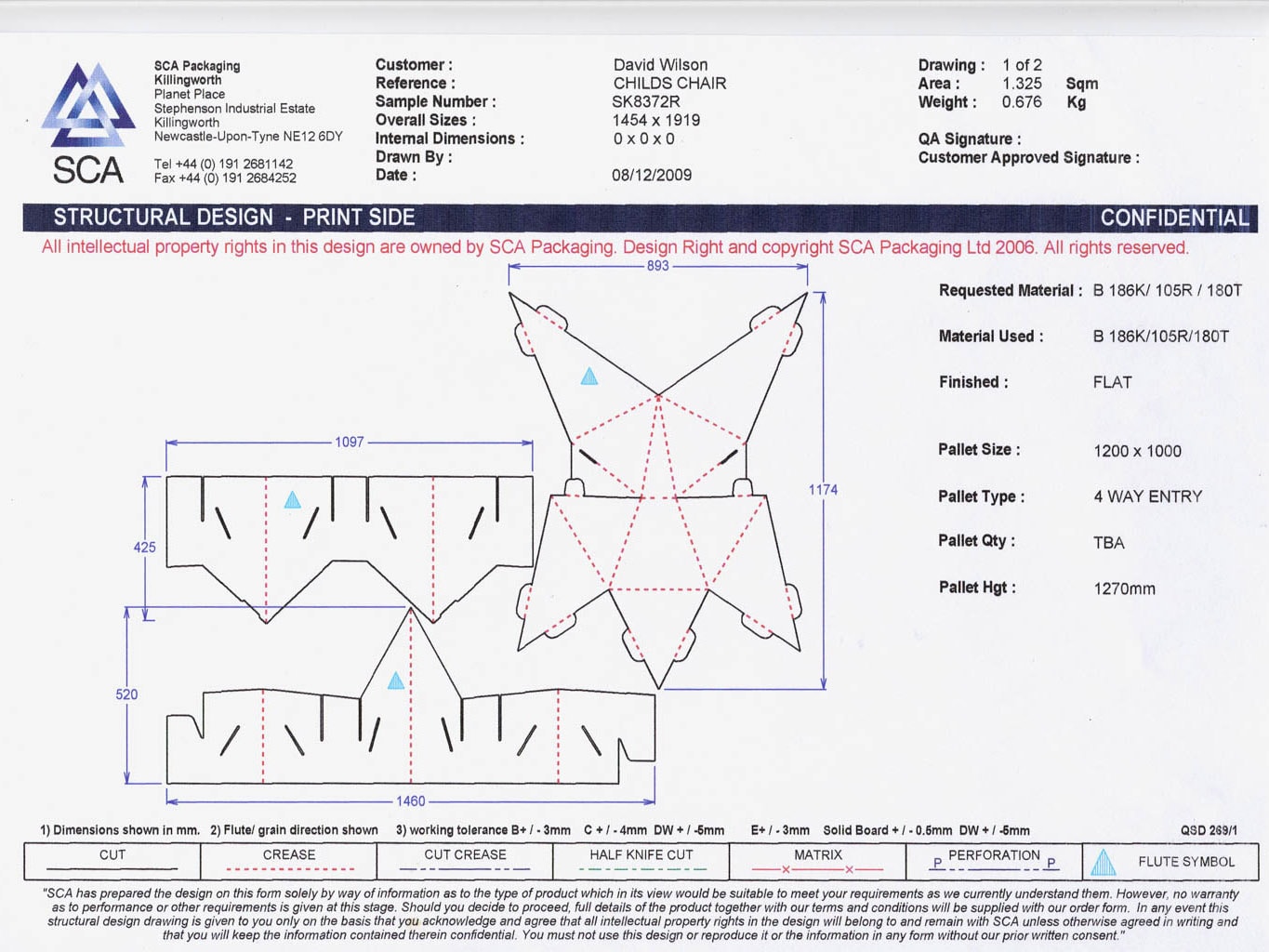
Components
The chair is assembled from 3 components, cut from corrugated cardboard using standard box-making processes.
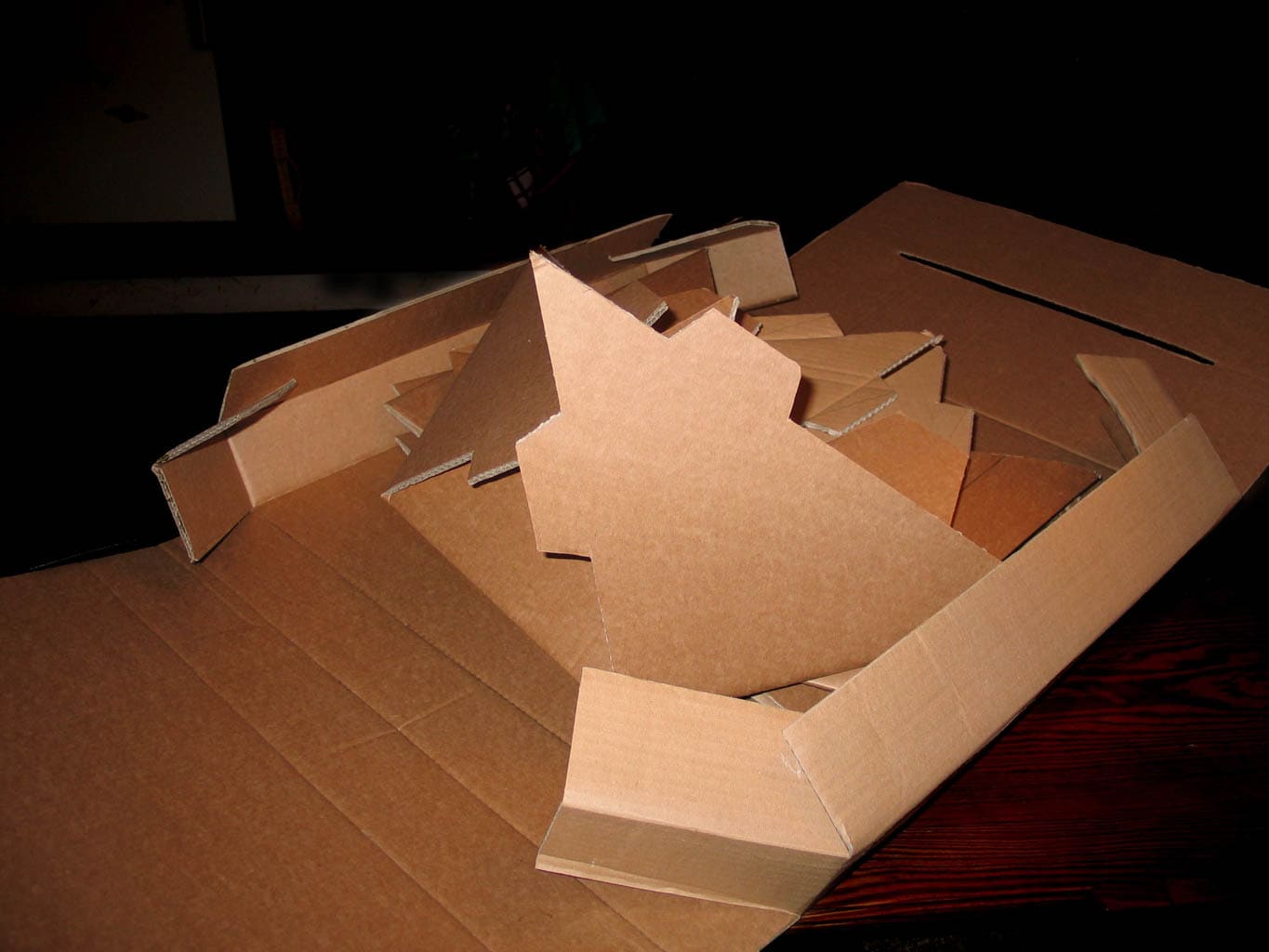
Problems of packaging
I never solved the problem of packaging the Star Chair. A purpose designed cardboard box consumes more carboard than the chair itself.
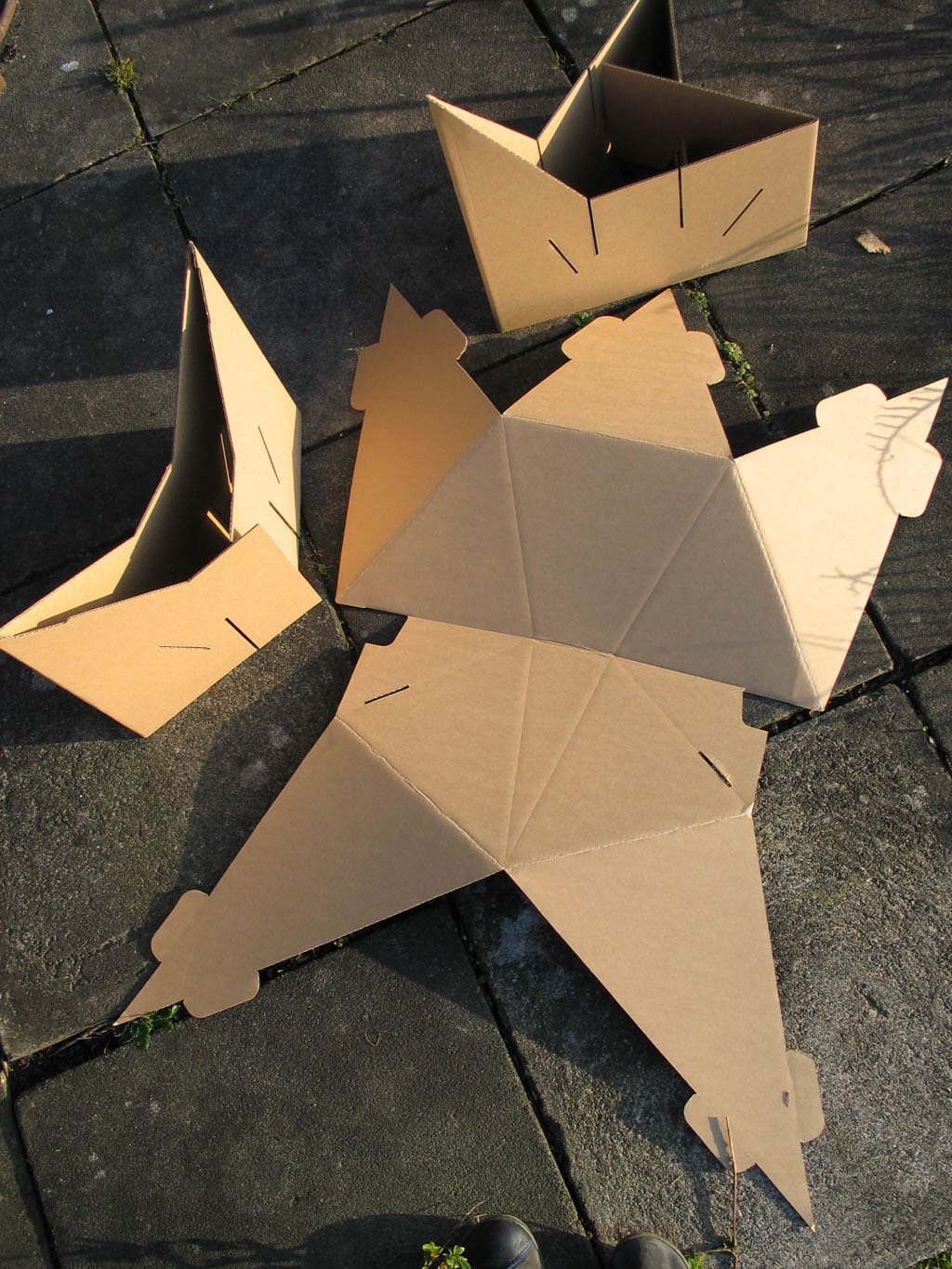
Assembly
The Star Chair slots together without the need for adhesives of mechanical fasteners.